If you own a split-level home in Northern Virginia and there’s a very good chance you do you’re sitting on one of the region’s most abundant and most misunderstood housing types. Built in waves between the 1960s and 1980s, split-levels dominate the streetscapes of Fairfax County, Arlington, Gainesville, Woodbridge, Leesburg, McLean, and Reston. They were built for a different era of family life. And as multigenerational living reshapes how Northern Virginia families actually use their homes in 2026, those same split-levels are now at the centre of one of the region’s fastest-growing renovation conversations.
A split-level home addition for multigenerational living is not a simple project and that’s exactly why most articles about it fall short. They talk about “in-law suites” in the abstract without addressing the specific structural, design, and zoning realities that make split-level additions fundamentally different from every other home addition type in Northern Virginia.
This guide does it differently. By the end, you’ll understand exactly what makes split-level additions challenging, what design solutions actually work, how to navigate Fairfax and Arlington County permitting, and how to create a multigenerational space that gives everyone in your family real independence — without anyone feeling like they’re living in someone’s basement. If you’re weighing renovation against buying, also see our 2026 financial comparison guide.
Call AZA Builders today at (571) 393-2722 for a free estimate.
Why Multigenerational Living Is Booming in Northern Virginia Right Now
This isn’t a trend — it’s a structural shift. Several forces are colliding in 2026 to make multigenerational living not just popular but financially necessary for Northern Virginia families:
Rising housing costs make combining households more practical than maintaining two separate properties in one of the country’s most expensive markets. With the Northern Virginia median home price hovering around $715,000 and mortgage rates above 6.5%, the math for adult children moving out — or aging parents buying separately — simply doesn’t pencil out the way it once did.
The aging-in-place movement is accelerating. AARP reports that 75% of older adults want to remain in their homes as they age, driving demand for age-friendly spaces — curbless showers, wider doorways, main-level bedroom access — directly into Northern Virginia’s home addition market.
Federal employment and defence contractor families frequently need flexible multigenerational arrangements due to deployments, travel schedules, and the need for consistent childcare.
And then there’s the cultural reality: a significant and growing segment of Northern Virginia’s diverse population — large South Asian, East Asian, and Latin American communities across Fairfax County and Prince William County — has always prioritised multigenerational living as a core family value, not an accommodation.
The result: home additions designed for multigenerational living — in-law suites, separate entrances, secondary kitchenettes, accessible bedrooms — have become one of AZA Builders’ most requested project categories across Northern Virginia.
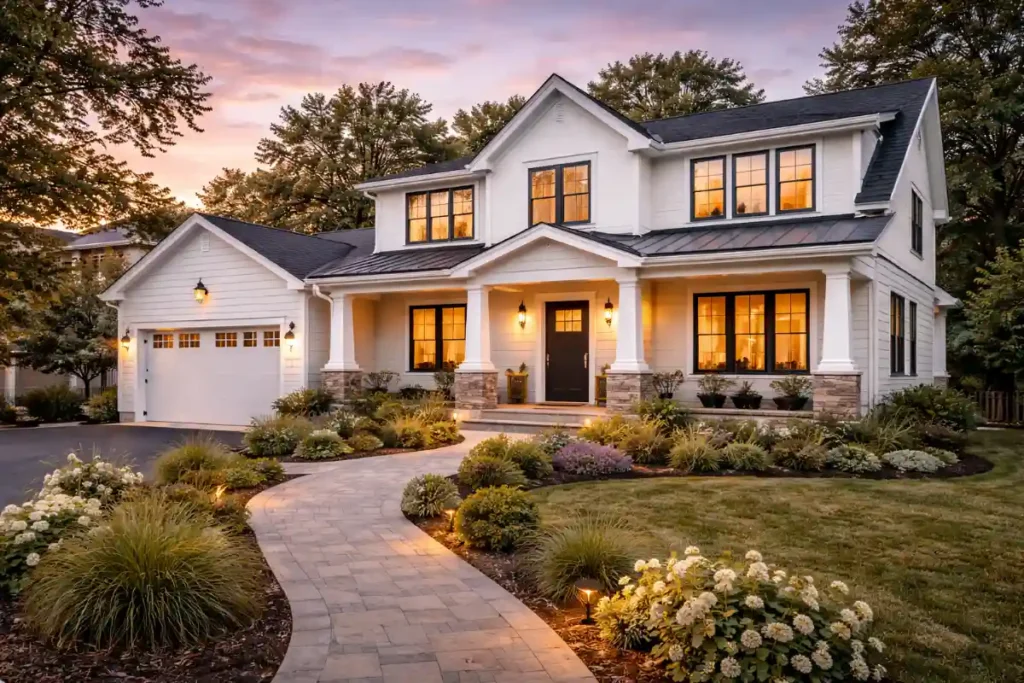
The Split-Level Advantage (And Why Your Home Is Actually Perfect for This)
Here’s the thing most homeowners don’t realise: split-level homes are surprisingly well-suited for multigenerational additions — once you understand their geometry.
A classic Northern Virginia split-level typically has three offset levels: a lower level (usually 4–5 feet below grade, housing a family room, garage, or utility space), a main level (living, dining, kitchen), and an upper level (bedrooms). That staggered structure already creates natural separation between zones — which is exactly what multigenerational living demands.
The lower level of a split-level — the zone most often underutilised — is your first and most cost-efficient multigenerational opportunity. Unlike a full basement, a split-level’s lower level typically has above-grade windows, existing framing, and direct exterior access. Our basement renovation expertise applies directly here: with the right work, that lower level becomes a fully private suite with its own entrance, its own bathroom, and its own identity — without anyone walking through someone else’s kitchen.
For families with aging parents who need accessible, single-floor living, the split-level’s main level can be extended with a home addition that connects seamlessly to existing living and kitchen spaces — exactly the aging-in-place layout that works best.
The 4 Structural Challenges of Split-Level Home Additions (That Nobody Else Talks About)
Here’s where other articles go quiet. The structural realities of split-level additions are specific, complex, and absolutely non-negotiable. Get these wrong and your project fails inspection, blows your budget, or worse.
Challenge 1 — Unreinforced Masonry in 1960s–1980s Construction
The majority of Northern Virginia’s split-level stock was built with unreinforced concrete block or brick masonry foundations — common practice of that era. When you add a new level or substantial weight above existing masonry walls, those walls may not structurally bear the new load without significant reinforcement.
In a documented Arlington split-level renovation, contractors discovered mid-project that existing masonry was unreinforced, requiring structural post and footing installation — working around existing sewer pipes — just to support a new upper-level addition. That is not a minor scope change; it is a foundational redesign.
Before any split-level addition in Northern Virginia, a licensed structural engineer must assess the existing masonry. This step can either save you from a catastrophic mid-project discovery or confirm your foundation is solid — either outcome is worth the assessment cost.
Challenge 2 — The ‘Build Up vs. Build Out’ Decision and Lot Coverage Limits
Split-level homeowners have two primary addition directions: up (adding a new level) or out (extending the footprint). Both have significant constraints in Fairfax County and Arlington.
Building up requires confirming that the existing structure can bear new load, navigating Fairfax County’s height limits, and designing a roofline that doesn’t overshadow a neighbour — a live issue in Fairfax County right now, as the high-profile Greenbriar neighbourhood addition dispute demonstrated.
Building out requires compliance with setback requirements. Fairfax County’s typical side yard setback is around 8 feet, and on many of Northern Virginia’s older split-level lots there may be very little room to extend. Arlington County adds Floor Area Ratio (FAR) calculations that can prohibit a large addition even if setbacks and height limits are met.
The practical solution for most split-level multigenerational additions: a combination approach — modest rear extension for a main-level accessible suite, paired with lower-level conversion — hits the sweet spot of square footage gain without triggering setback or FAR violations.
Challenge 3 — The Roofline Integration Problem
Split-level homes have notoriously complex rooflines — multiple pitches, hips, and valleys reflecting the staggered floor plan below. Adding on without creating a visual mess — or a water infiltration disaster — requires a designer who truly understands how to integrate new rooflines with existing structure.
Poor roofline integration is immediately visible from the street, hurts curb appeal and resale value, and is a leading cause of long-term water intrusion. AZA Builders plans the exterior elevation as part of the initial design phase — a principle central to our exterior renovation work — ensuring every addition looks architecturally intentional from day one.
Challenge 4 — HVAC Zoning and the Multi-Level Comfort Problem
Split-level homes already struggle with HVAC efficiency — the staggered floor plates make consistent temperature distribution challenging. Adding a multigenerational suite almost always requires either extending existing HVAC (which may already be undersized) or installing a dedicated mini-split for the new space.
For multigenerational living specifically, a separate HVAC zone isn’t just comfort — it’s a privacy and independence feature. Nobody wants to control Grandma’s thermostat from the main level. A dedicated mini-split gives complete climate-control independence at a fraction of the cost of a full system expansion.
The 5 Best Multigenerational Addition Designs for Northern Virginia Split-Levels
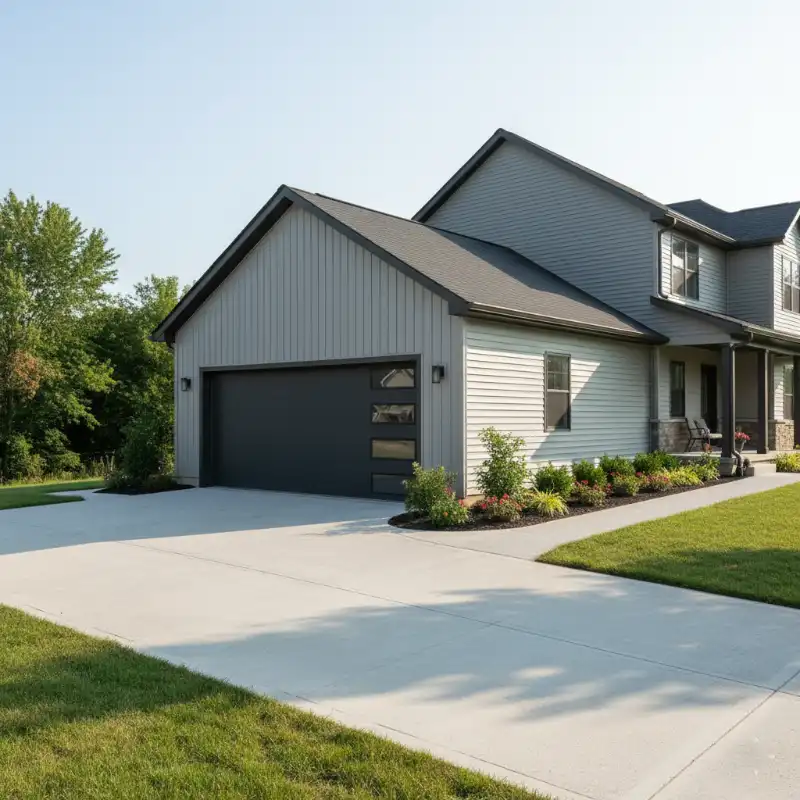
Design 1 — The Lower-Level Independent Suite (Best for Privacy)
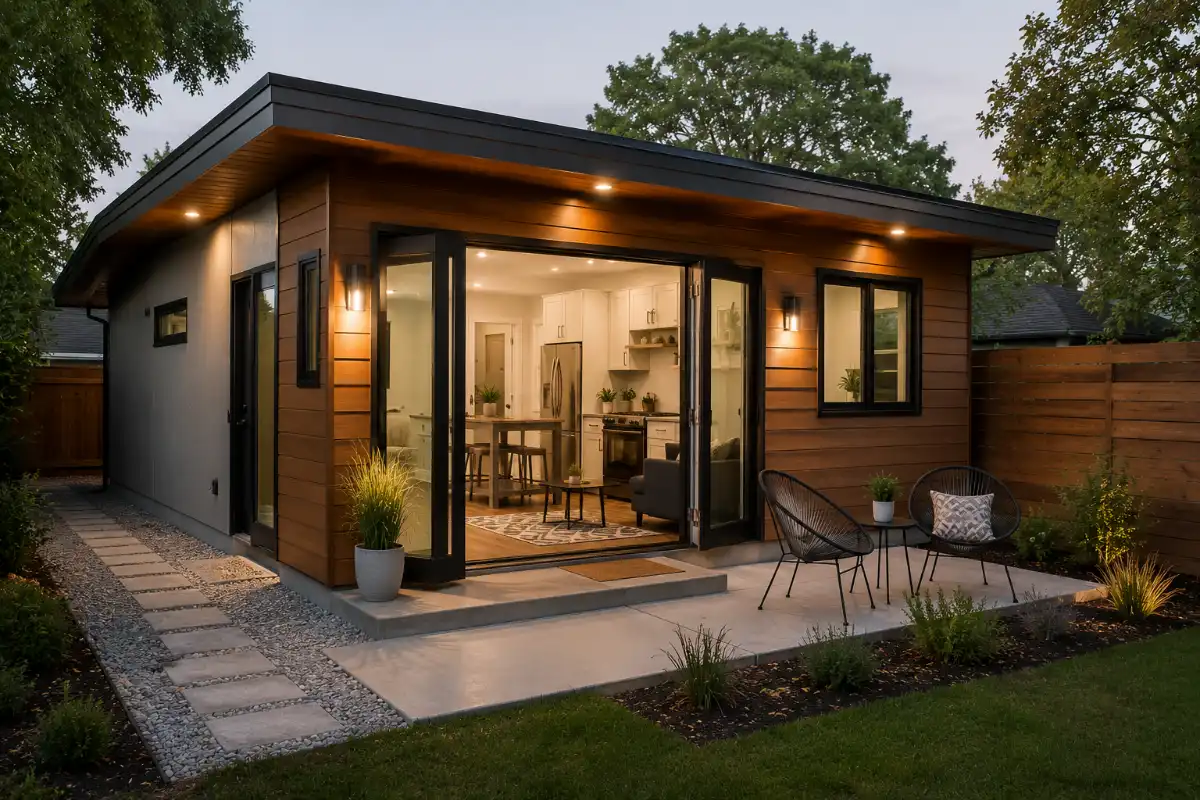
The most popular design for Northern Virginia split-levels. The lower level’s existing exterior access, above-grade windows, and separate grade entry make it ideal for conversion into a fully independent suite. Our basement renovation team specialises in exactly this transformation — turning underused lower levels into complete, dignified living spaces.
Key features of a well-executed lower-level suite:
- Private entrance directly from grade — no walking through the main level
- Full bathroom with aging-in-place features: curbless shower, comfort-height fixtures, blocking for future grab bars
- Kitchenette or wet bar for meal independence
- Dedicated mini-split HVAC for independent climate control
- Acoustic insulation between the lower-level ceiling and main-level floor
Design 2 — The Rear Addition Main-Level Suite (Best for Accessibility)
If aging-in-place is the primary driver, a rear home addition off the main level eliminates stair navigation entirely for the suite’s occupant. This creates a private bedroom, full bathroom remodel, and sitting room connected directly to existing living spaces — integrated architecturally, not bolted on.
For maximum future-proofing: 36-inch-wide doorways, zero-threshold shower, backing in all bathroom walls for future grab bars. Design it once, and it works for decades without looking like a medical facility.
Design 3 — The Third-Level Addition (Best for Maximum Square Footage)
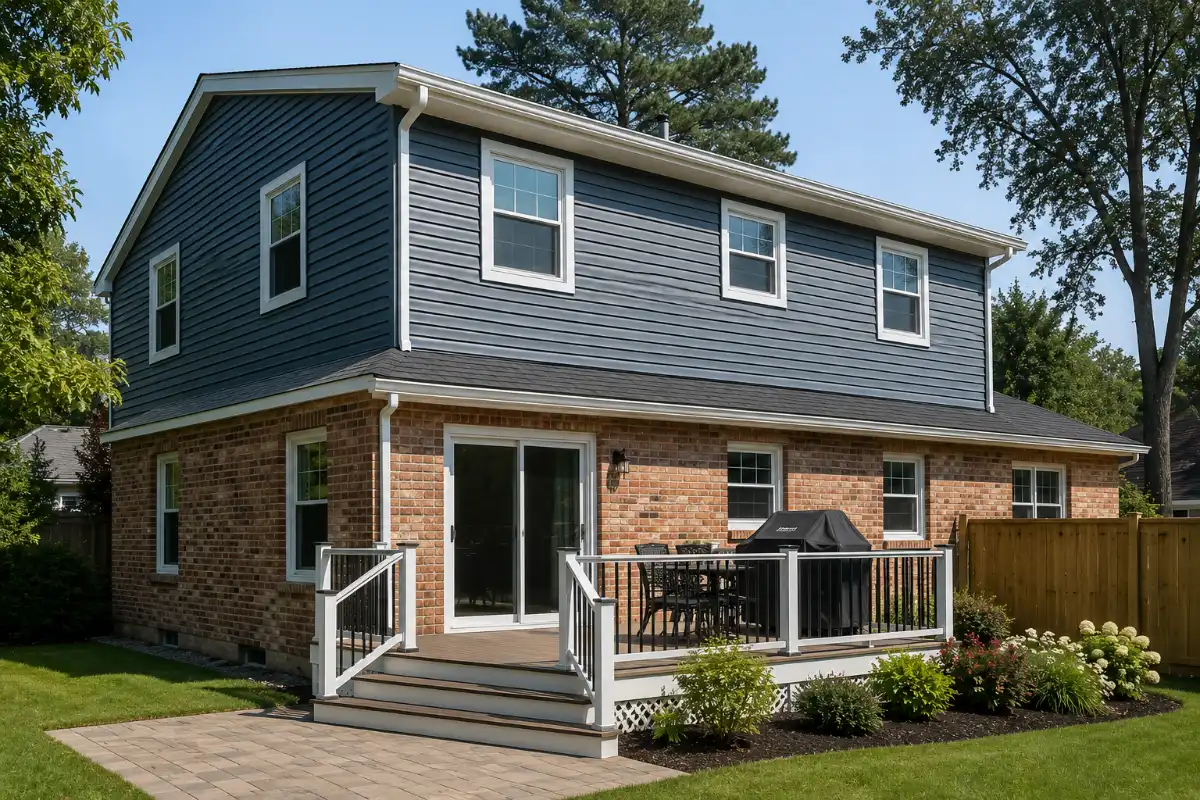
For split-levels with strong structural bones, adding a third level creates substantial square footage — a full multigenerational suite completely separated from the main family floors below. In scope, this is a full home renovation project, requiring structural assessment of existing masonry, roof removal, and new framing. It delivers the most separation and privacy, which matters enormously in real multigenerational living.
Design 4 — The Garage Conversion Suite (Best for Budget-Conscious Families)
Northern Virginia split-levels almost universally include an attached garage at the lower level — your fastest path to multigenerational square footage. A garage conversion eliminates foundation work entirely (the slab is already there), creates a naturally separate space with straightforward exterior access, and typically delivers the highest value relative to cost of any multigenerational addition option.
A well-executed garage conversion includes insulated walls and ceiling, mini-split HVAC, a full bathroom addition, and a kitchenette for true living independence.
Design 5 — The Full-Home Multigenerational Reconfiguration (Best for Long-Term Flexibility)
Sometimes the right answer is a comprehensive reconfiguration across all three levels. Upper-level bedrooms become a private primary suite for aging parents; main level becomes shared family space; lower level accommodates adult children or independent family members. See our full home renovation services and living space renovation offerings for scope and examples. This is the option that creates a home flexible enough to shift configurations as the family changes over time — and it’s the most dramatic transformation of a dated 1970s split-level into a genuinely modern multigenerational home.
Fairfax County, Arlington & Prince William County Permitting: What You Must Know
This is where multigenerational split-level additions go wrong more often than anywhere else. Permitting requirements in Northern Virginia are specific, county-dependent, and actively enforced.
Fairfax County
Requires a residential addition building permit plus separate electrical, mechanical, and plumbing permits. Side yard setbacks are typically 8 feet. A secondary kitchen triggers an additional sink affidavit requirement. Projects disturbing more than 2,500 square feet trigger a Land Disturbance/Grading Permit under the Chesapeake Bay Preservation Act.
Arlington County
Uses a general residential building permit for most additions, with a separate accessory dwelling permit for true independent living units. Arlington’s Floor Area Ratio (FAR) control is often the decisive factor — a project can comply with all setbacks and height limits but still be prohibited if total square footage exceeds the FAR allowance for the lot.
Prince William County (Gainesville, Woodbridge, Bristow)
Similar framework to Fairfax. The Building Development Division oversees residential addition permits. Licensed contractors should pull permits on behalf of homeowners.
Loudoun County (Leesburg, Ashburn)
Land disturbance threshold is 5,000 square feet before triggering Chesapeake Bay Preservation Act requirements — slightly more permissive than Fairfax/Arlington for larger footprint projects.
The single most important permitting advice: hire a licensed Class A contractor who knows your specific county’s process, pulls permits on your behalf, and handles inspections at every required stage. Review AZA Builders’ Building Permit Guide for a full county-by-county walkthrough.
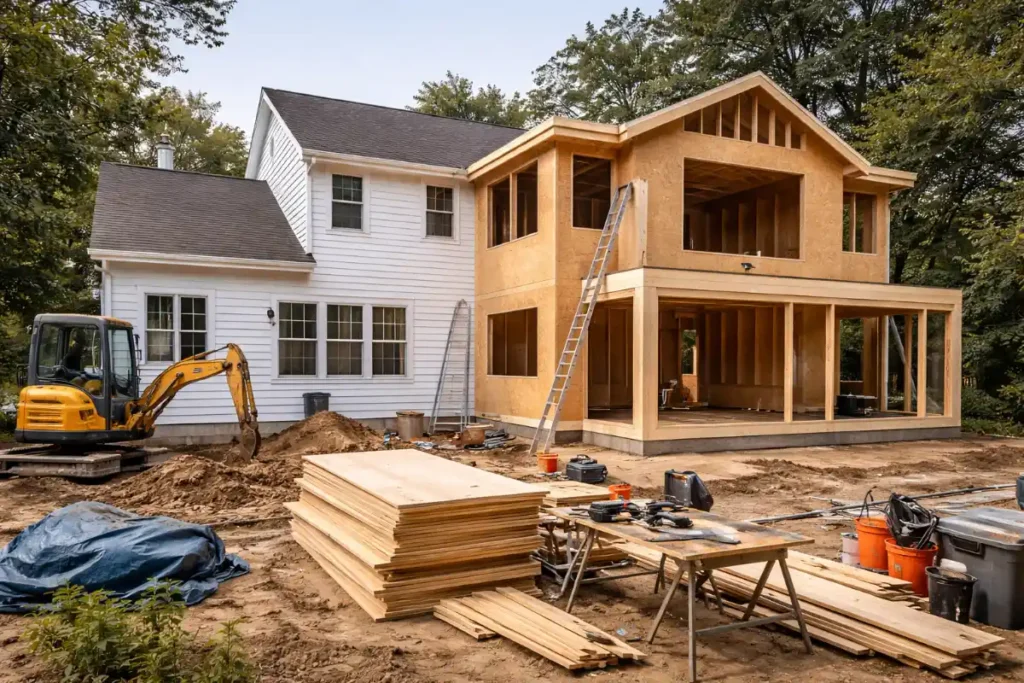
Must-Have Features for Every Multigenerational Suite in Northern Virginia
These are the features that separate a truly livable multigenerational space from a disappointing renovation:
- PRIVATE ENTRANCE: Non-negotiable for real independence. Ability to come and go without walking through another family member’s living space is fundamental to multigenerational harmony.
- FULL BATHROOM WITH AGING-IN-PLACE DESIGN: Curbless shower with built-in bench and linear drain, comfort-height toilet, wide doorway (minimum 36 inches), non-slip flooring, and backing for future grab bars. This is bathroom remodeling done with foresight — designed once, works for decades.
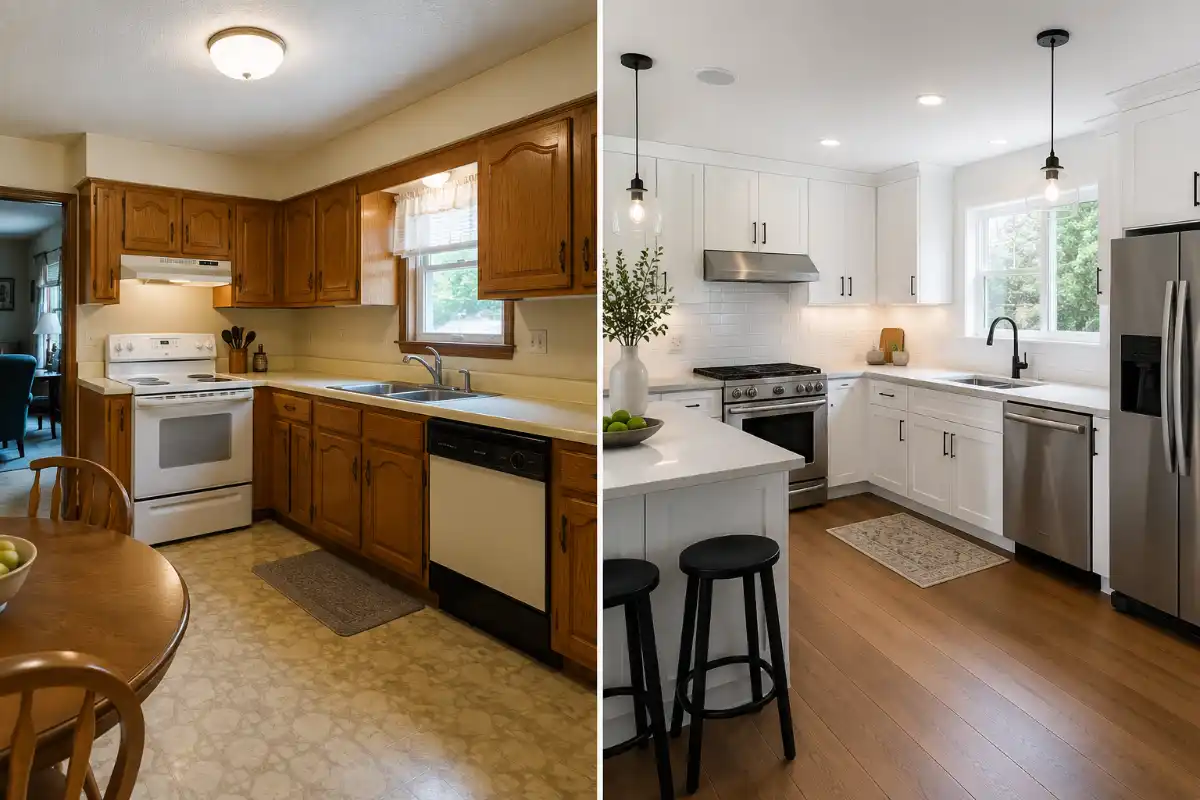
- KITCHENETTE OR FULL KITCHEN ACCESS: A compact kitchenette dramatically improves daily independence and reduces friction. See our kitchen remodeling service if a full kitchen suite is the goal.
- DEDICATED HVAC ZONE: A mini-split system gives complete, independent climate control — eliminating the friction of shared thermostat arrangements entirely.
- SOUNDPROOFING: Acoustic insulation in ceilings and shared walls is an investment that pays back every single day in multigenerational harmony.
- OUTDOOR CONNECTION: A private patio or garden-level area accessed from the suite creates a quality-of-life upgrade that aging parents and independent family members deeply value. This connects naturally to our outdoor living design work — a suite with its own outdoor space functions almost like a separate home.
- SMART LIGHTING & SAFETY FEATURES: Motion-sensor night lights, voice-activated controls, and accessible switch placement are safety-first features that appeal to every generation.
What Does a Split-Level Multigenerational Addition Cost in Northern Virginia? (2026 Real Numbers)
Real numbers, no hedging. Northern Virginia construction costs run higher than national averages — the region’s DMV premium reflects competition for skilled labour, rigorous regulatory requirements, and elevated material standards.
| Project Type | Estimated Cost (NoVA 2026) | Timeline |
| Lower-level suite conversion (existing space) | $60,000–$120,000 | 10–16 weeks |
| Garage conversion to multigenerational suite | $40,000–$80,000 | 8–14 weeks |
| Rear main-level bedroom/bath addition | $120,000–$220,000 | 14–20 weeks |
| Third-level addition (new floor) | $200,000–$400,000 | 24–36 weeks |
| Full-home multigenerational reconfiguration | $200,000–$500,000+ | 20–40 weeks |
AZA Builders provides transparent, fixed-scope estimates so you know exactly what you’re getting before a single nail is driven. Financing options including HELOCs and renovation loans are available — visit our Financing Your Construction page for details. For project inspiration, explore our portfolio of completed Northern Virginia renovations.
Why AZA Builders for Your Split-Level Multigenerational Addition in Northern Virginia
Designing and building a split-level home addition for multigenerational living requires a contractor who understands three things simultaneously: the structural quirks of 1960s–1980s Northern Virginia construction, the specific permitting landscape across Fairfax, Arlington, Prince William, and Loudoun Counties, and the human reality of what multigenerational living actually needs to feel like.
At AZA Builders, we bring all three. Our Class A licensed team handles structural assessment, design, permitting, construction, and final inspection — all under one roof, all with transparent communication every step of the way. Our services span every dimension of a multigenerational split-level renovation: bathroom remodeling designed for aging in place, basement renovations that create dignified independent living spaces, exterior renovations that make additions look architecturally intentional, garage conversions that maximise existing footprints, home additions and extensions for main-level suite creation, kitchen remodeling to serve growing multigenerational households, living space renovations for shared family areas, outdoor living spaces that give every family member a private outdoor connection, and full home renovations for families ready to reimagine their split-level entirely.
The split-level sitting in your Fairfax, Gainesville, or Arlington neighbourhood isn’t a limitation. It’s an opportunity hiding in plain sight. With the right design, the right contractor, and a clear understanding of the structural and permitting realities specific to Northern Virginia, your 1970s split-level can become a genuinely modern multigenerational home — one where aging parents have real independence, adult children have real privacy, and your whole family stays connected without crowding each other.
That’s not a fantasy. That’s what thoughtful split-level renovation looks like in 2026.
FAQ: Split-Level Home Addition for Multigenerational Living in Northern Virginia
Q: Can you add a multigenerational suite to a split-level home in Fairfax County?
A: Yes. Split-level homes in Fairfax County are excellent candidates for multigenerational additions, particularly through lower-level conversions, rear additions, and garage conversions. Projects require a residential addition permit and must comply with setback, height, and lot coverage requirements. See our Building Permit Guide for full details.
Q: What is the most affordable multigenerational addition for a Northern Virginia split-level?
Garage conversions and lower-level suite conversions are typically the most cost-efficient, ranging from $40,000–$120,000. Both leverage existing structure and exterior access without requiring new foundation work.
Q: Do I need a separate kitchen in an in-law suite in Virginia?
A: Not necessarily — a kitchenette often provides sufficient independence. However, if a full second kitchen is desired, Fairfax County requires an additional sink affidavit. Our kitchen remodeling team can design a kitchenette or full kitchen suite depending on your needs.
Q: How long does a split-level multigenerational addition take in Northern Virginia?
A: Lower-level conversions and garage conversions typically take 8–16 weeks; rear addition suites run 14–20 weeks; third-level additions take 24–36 weeks. Permitting in Northern Virginia counties adds 4–8 weeks to the planning phase.
Q: What structural issues should I expect with a 1960s or 1970s split-level addition?
A: Unreinforced masonry foundations are the most common structural challenge in Northern Virginia’s older split-level stock. A structural engineer must assess load-bearing capacity before any addition that adds new levels or significant weight. Visit our FAQ page or contact us for a free project assessment.
Q: Can I see examples of AZA Builders’ multigenerational home addition work?
A: Yes — visit our project portfolio to see completed home additions and renovations across Northern Virginia. For design inspiration, explore our Design Ideas & Inspiration gallery.
Your Split-Level Already Has What Your Family Needs — Let’s Unlock It
At AZA Builders, we’ve done this work across Northern Virginia in Bristow, Fairfax, Gainesville, Arlington, McLean, Leesburg, Reston, and Woodbridge — with families navigating exactly the challenges described in this guide. We know the structural concerns. We know the permitting process. And we know how to design multigenerational spaces that people actually love living in. Explore our completed projects or read our FAQ to learn more about working with AZA Builders.
The first step is a free, no-pressure conversation about your specific home, your family’s needs, and what’s actually possible within your lot, your budget, and your timeline. Contact us today to get started. See us on Instagram & YouTube.
READY TO START? GET YOUR FREE ESTIMATE TODAY 📞 (571) 393-2722
📍 Serving Bristow, Fairfax, Gainesville, Arlington, Leesburg, McLean, Reston, Woodbridge & all of Northern Virginia, Maryland & DC
Your family deserves a home that grows with you. Let’s build it — right the first time.