If you’ve been Googling “composite deck vs wood deck” at 11pm while your current deck wobbles under your feet first, step back inside, and second, you’re in exactly the right place.
Here in Northern Virginia, this is one of the most asked questions we get at AZA Builders. Homeowners in Fairfax, Gainesville, Arlington, Leesburg, McLean, Reston, Woodbridge, and Bristow all want the same thing: a beautiful outdoor space that doesn’t become their second job every spring.
So let’s cut through the fluff, skip the contractor-speak, and talk real numbers, real performance, and real long-term value because your backyard deserves better than a guess.
Call AZA Builders today at (571) 393-2722, request a free quote.
What We’re Actually Comparing: Composite Deck vs Wood Deck 101
Before we dive into costs, let’s get clear on what we mean.
Wood decking most commonly pressure-treated pine, cedar, or redwood — is the classic choice. It’s been the go-to for decades because it’s widely available, immediately affordable, and genuinely beautiful when freshly installed.
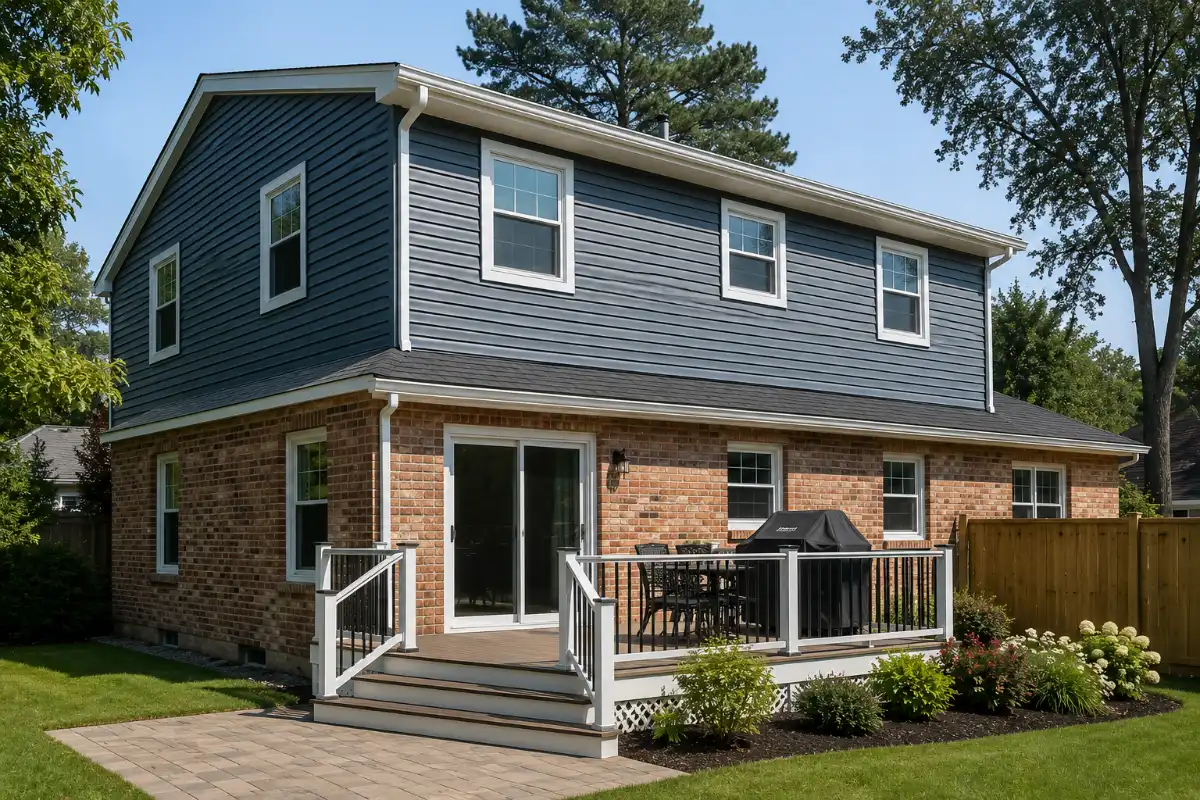
Composite decking is an engineered alternative made from a blend of recycled wood fibers and plastic polymers. Modern “capped” composite boards wrap that core in a hard polymer shell meaning they’re engineered to resist moisture, insects, fading, and staining in ways that natural wood simply cannot.
Both can create a stunning outdoor living space. But one of them will cost you far more over time than you probably expect. Let’s find out which.
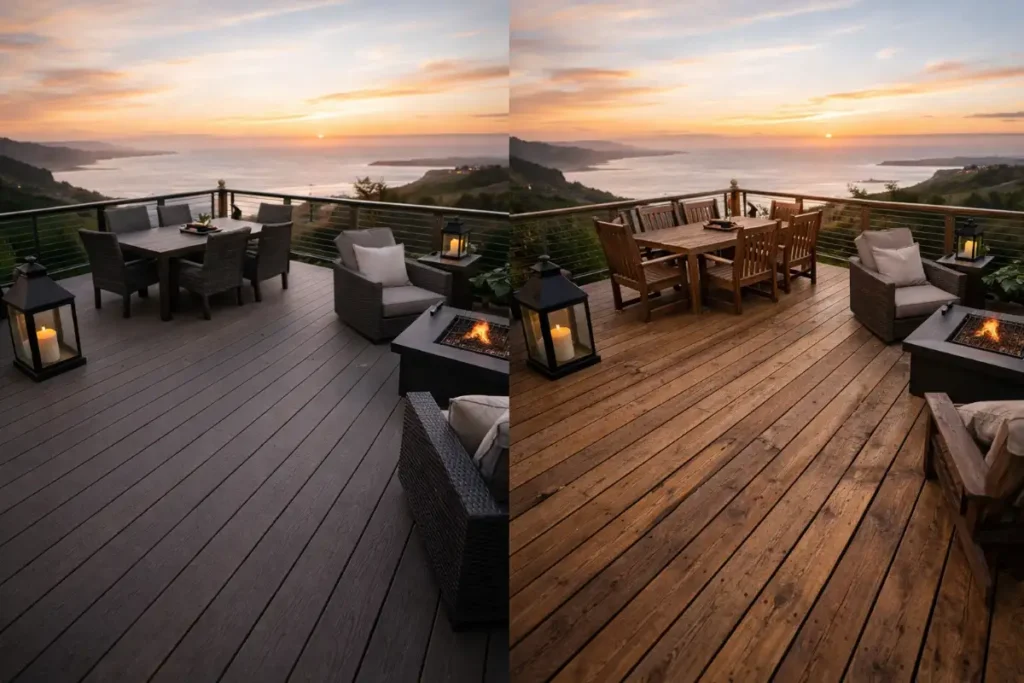
The Real Cost Breakdown: Composite Deck vs Wood Deck Over 30 Years
This is where most articles give you a single number and call it a day. We’re going deeper because the upfront price is only the opening chapter of a very long financial story.
Upfront Costs: Wood Wins Round One
There’s no getting around it — wood costs less to install. Pressure-treated pine decks typically run $15–$25 per square foot installed, while composite decking lands between $30–$60 per square foot professionally installed. On a standard 300–400 sq ft deck in Northern Virginia, that can mean a $10,000–$15,000 difference off the starting line.
That’s real money. And if your budget is tight right now, wood is a perfectly reasonable short-term solution — especially if you’re planning to sell within five years.
But here’s the part the upfront price tag doesn’t tell you.
Maintenance Costs: Where Wood Gets Expensive Fast
A wood deck in Northern Virginia isn’t just a deck it’s a maintenance schedule. Our region’s mix of hot, humid summers, hard freeze-thaw cycles through winter, and the occasional nor’easter is essentially a stress test for outdoor wood every single year.
With a wood deck, expect to budget for:
- Annual or biannual staining and sealing: $300–$600/year in materials, or $800–$1,500 if you hire it out
- Power washing: $150–$300/year
- Board replacements (warping, rot, splinters typically start appearing around years 8–12): $500–$2,000+ per repair cycle
- Full deck replacement: most pressure-treated wood decks need a complete redo after 15–20 years
Over 15 years, wood deck maintenance alone can add up to $6,700 or more — and that’s before any major structural repairs.
By contrast, composite decking maintenance is almost embarrassingly simple: soap, water, and a gentle hose-down twice a year. Annual upkeep costs? Around $50. That’s not a typo.
The 30-Year Math (And Why It Changes Everything)
When you run the full 30-year ownership cost initial install + maintenance + eventual replacement — composite decking equals or outperforms pressure-treated wood financially for most Northern Virginia homeowners. In fact, by year 9 or 10, a composite deck has typically crossed the break-even point and starts pulling ahead on total cost savings.
Think about it this way: a composite deck installed by AZA Builders today can still be going strong in 2056 — with the same look, the same structural integrity, and no replacement in sight. A wood deck installed today will likely need significant work by 2036 and full replacement before 2050.
Durability in Northern Virginia’s Climate: This Is Where Composite Wins Decisively
If you live in Gainesville, Woodbridge, or Leesburg, you already know Virginia weather doesn’t play around.
Wood decking vulnerabilities in our region:
- Moisture absorption leads to warping, swelling, and cracking through freeze-thaw cycles
- Humidity creates ideal conditions for mold, mildew, and rot
- UV exposure fades and degrades unprotected wood rapidly
- Termites and wood-boring insects are a genuine concern in Northern Virginia
Composite decking performance in our region:
- Engineered to be moisture-resistant — it won’t absorb water, so freeze-thaw damage is essentially eliminated
- Polymer cap resists mold, mildew, and algae growth
- UV-stable pigments prevent the fading that plagues painted or stained wood
- Zero food value for insects termites can’t touch it
Premium capped composite products (like Trex, TimberTech, and Fiberon) now come with 25 to 50-year warranties covering fading, staining, and structural integrity. Try getting that warranty on a pine board.
Aesthetics: Does Composite Actually Look Good? (Yes, and Here’s Why It’s Gotten Incredible)
This used to be composite’s weakest argument. Early composite products from the 2000s did look a bit… plastic-y. Flat grain, odd sheen, nothing that fooled anyone.
That era is over.
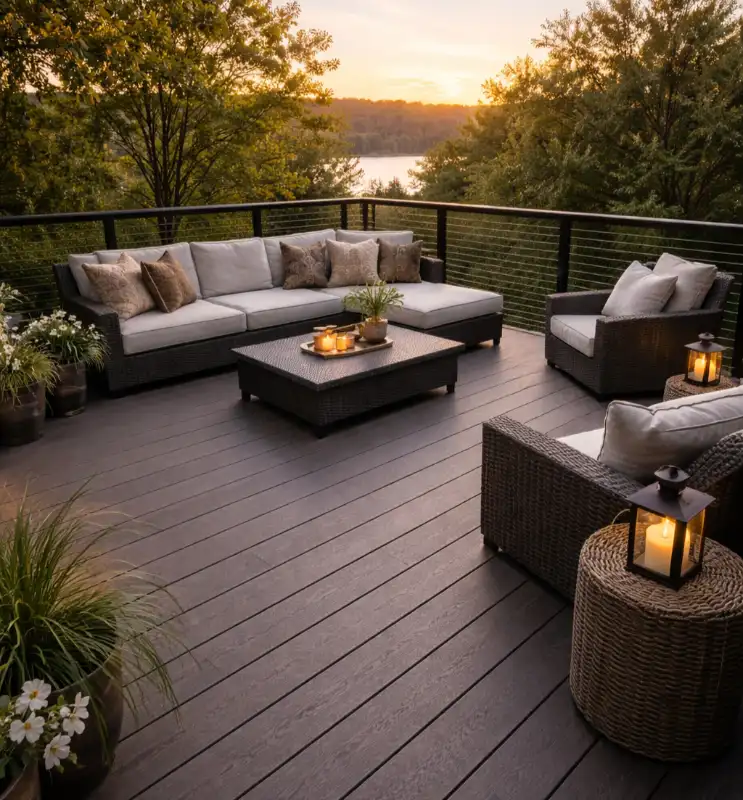
Modern capped composite decking has genuinely impressive aesthetics: deep wood-grain textures, natural color variation, rich tones from cedar to mahogany to driftwood grey. If you’ve walked across a high-end Trex Transcend or TimberTech Azek board recently, you know — it looks like real wood, feels solid underfoot, and doesn’t require you to squint generously.
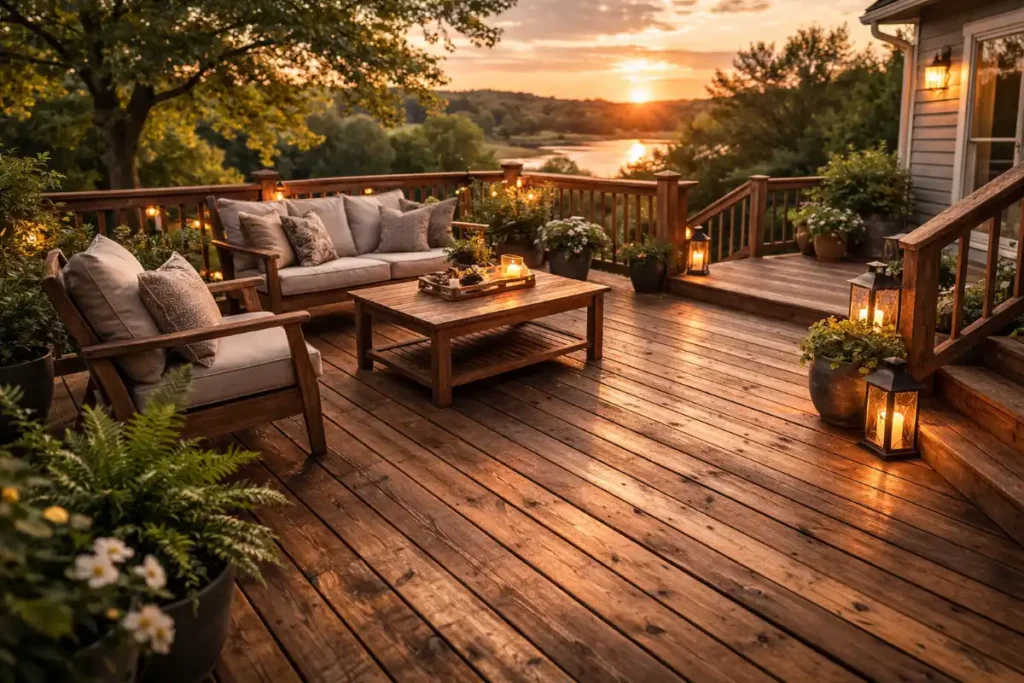
That said, if you’re a purist and you want the actual feel and smell of real hardwood — nothing quite replicates Ipe or red cedar at its freshest. Wood’s natural beauty is genuine and irreplaceable. The question is whether that aesthetic edge is worth the decade-long maintenance commitment that comes with it.
For most of our clients doing exterior renovations across Northern Virginia, the answer is no — composite wins on aesthetics-plus-longevity when you factor in how it will look in year 15 vs. a wood deck that hasn’t been stained in two seasons.
Home Resale Value: Which Deck Adds More to Your Northern Virginia Home?
Great question and the answer is more nuanced than “composite costs more, so it adds more.”
According to the Journal of Light Construction’s Cost vs. Value data, wood deck additions recoup around 83% of their cost at resale, while composite decks recoup approximately 68%. So on paper, wood has a slight resale edge.
BUT and this is a big but that calculation doesn’t account for:
- The condition of the wood deck at time of sale (a 10-year-old unmaintained wood deck is a liability, not an asset)
- Buyer perception: today’s Northern Virginia buyers, especially in Fairfax County and Arlington, actively look for low-maintenance outdoor features
- Home inspectors flagging aging wood decks as deferred maintenance items, which becomes a negotiating chip against you
A well-maintained composite deck signals quality construction, buyer-friendly upkeep, and lasting value. An aging wood deck raises questions. In our experience building home additions & extensions and outdoor living spaces across Northern Virginia, composite is consistently the upgrade that buyers notice — and appreciate.
Environmental Considerations: A Point Often Overlooked
If sustainability matters to you — and it increasingly does for homeowners we work with in McLean, Reston, and Arlington composite has a compelling story.
Most premium composite boards contain 50%–95% recycled content, repurposing materials like plastic bags and reclaimed wood fiber that would otherwise end up in landfills. You’re building your dream deck while keeping waste out of the waste stream. Not bad.
Wood, while renewable, requires ongoing use of chemical stains, sealers, and preservatives throughout its lifecycle chemicals that can leach into the surrounding soil. Pressure-treated lumber also involves chemical treatment at the manufacturing stage.
Neither option is perfectly “green,” but if eco-conscious building is part of your full home renovation vision, composite is the more sustainable long-term choice.
So Which One Should You Actually Choose?
Here’s the honest, straight-talk answer based on 15+ years of building outdoor spaces across Northern Virginia:
Choose composite decking if:
- You plan to stay in your home for 7+ years
- You want a beautiful outdoor space without the annual maintenance grind
- You’re doing a broader outdoor living renovation and want everything to last
- You value long-term cost efficiency over lowest upfront price
- You’re building alongside other upgrades like a kitchen remodeling or living space renovation and want consistent quality throughout
Choose wood decking if:
- Your budget is genuinely constrained right now and you need lower upfront cost
- You’re planning to sell within 2–4 years and want to maximize short-term ROI
- You love the authentic look and feel of real hardwood and are committed to maintaining it
- You’re using premium hardwoods (like Ipe) that have their own exceptional durability story
Bonus: 5 Questions to Ask Your Deck Contractor Before You Sign Anything
You deserve to be an informed buyer. Before any deck project in Gainesville, Woodbridge, Leesburg, or anywhere in Northern Virginia, ask these:
- Are you licensed and insured in Virginia? (AZA Builders is always verify with any contractor)
- What composite brands and product lines do you work with? (Ask specifically about capped vs. uncapped composite)
- What’s included in your warranty materials AND labor?
- Can I see examples of composite decks you’ve built in Northern Virginia specifically?
- How do you handle permits and HOA approval in my county?
If a contractor can’t answer all five confidently keep looking.
Why Northern Virginia Homeowners Trust AZA Builders for Outdoor Living
At AZA Builders, we’re not just a contractor we’re your neighbors. Based in Bristow and serving homeowners across Fairfax, Gainesville, Arlington, Leesburg, McLean, Reston, Woodbridge, and the greater Northern Virginia/Maryland/DC area, we’ve spent over 15 years turning backyards, basements, kitchens, and whole homes into spaces people absolutely love.
Our outdoor living projects are designed around how you actually live not a one-size-fits-all template. Whether you’re looking to build a composite deck that becomes the heart of your summer entertaining, add a pergola, or combine your deck project with a broader exterior renovation or home addition, we bring transparent project management, top-tier craftsmanship, and real communication from day one to final walkthrough.
And if your project goes beyond the backyard? Our team handles everything from bathroom remodeling and basement renovations to kitchen remodeling, garage conversions, living space renovation, and full home renovation all under one roof, all with the same commitment to quality.
Frequently Asked Questions: Composite Deck vs Wood Deck
Q: How long does a composite deck last in Northern Virginia?
A: Premium capped composite decking lasts 25 to 50 years with minimal maintenance making it ideal for Virginia’s climate with its humid summers and freeze-thaw winters.
Q: Is composite decking worth the extra cost in Virginia?
A: For most homeowners staying 7+ years, yes. The long-term maintenance savings on composite typically offset the higher upfront cost within 7–10 years, especially in Northern Virginia’s demanding climate.
Q: What’s the best composite decking brand for Northern Virginia?
A: Brands like Trex, TimberTech, and Fiberon all perform well in our region. At AZA Builders, we recommend capped composite products with UV protection and warranties of at least 25 years.
Q: Does a composite deck add value to a home in Fairfax County or Arlington?
A: Yes. Both wood and composite decks add resale value, but a well-maintained composite deck increasingly appeals to buyers seeking low-maintenance outdoor living a growing priority among Northern Virginia buyers.
Q: Can I add a deck as part of a larger home renovation project?
A: Absolutely. AZA Builders regularly combines deck projects with exterior renovations, home additions, and full home renovations for maximum value and cohesive design.
Final Thoughts
The bottom line? Your deck is one of the most-used — and most-judged — spaces in your home. Guests see it. Buyers notice it. You live on it. Choosing between composite and wood isn’t just a material decision; it’s a 15-to-30-year commitment to your home’s comfort, curb appeal, and value.
If you’re a Northern Virginia homeowner who’s tired of repainting the same boards every spring, or someone who simply wants to build it once and enjoy it for decades — composite decking is your answer. If budget is the priority today and you’ll be selling soon, a well-maintained wood deck still delivers. Either way, the single most important decision isn’t the material.
It’s who builds it.
At AZA Builders, we’ve been building outdoor spaces that Northern Virginia homeowners are genuinely proud of for over 15 years from Bristow to Fairfax, Woodbridge to Leesburg, McLean to Arlington. We show up on time, we communicate clearly, we pull the right permits, and we don’t disappear after the final nail is driven. See us on Instagram & YouTube.
Ready to stop scrolling and start building? Get your free, no-pressure estimate today — and let’s talk about what your backyard can actually become.
Ready to Build Your Dream Deck in Northern Virginia?
Stop letting your backyard be an afterthought. Whether you’re leaning composite or wood, the first step is the same: a real conversation with a contractor who knows Northern Virginia’s climate, HOA requirements, and what actually lasts here.
Get your free estimate from AZA Builders today.
📞 (571) 393-2722
📍 Serving Bristow, Fairfax, Gainesville, Arlington, Leesburg, McLean, Reston, Woodbridge & all of Northern Virginia, Maryland & DC
Your outdoor living space is waiting. Let’s build it right — the first time.