Design-Build vs General Contractor in Northern Virginia: this is the question that stops most homeowners cold at the very beginning of their renovation journey. You know you want to transform your home. You have a budget in mind. You have a vision. And then someone mentions a design-build firm and suddenly you are wondering whether you have been thinking about this entirely wrong.
Here is the honest answer: both models can produce outstanding results. Both can also produce expensive disasters. The difference is not in the quality of the contractor. The difference is in the structural alignment between the model you choose and the type of project you are planning. Choose the wrong model for your project type and you will pay for it in budget overruns, design changes mid-construction, and the special kind of stress that comes from watching two professionals disagree about whose fault something is while your kitchen sits unfinished.
At AZA Builders, we operate as a Class A licensed Virginia general contractor with the design coordination, project management depth, and full-service capability that most homeowners associate with a design-build experience. We serve Bristow, Fairfax, Gainesville, Arlington, McLean, Leesburg, Reston, and Woodbridge, and we have navigated both sides of this conversation with hundreds of Northern Virginia homeowners. This guide gives you the unfiltered breakdown so you can choose with confidence.
Call us today at (571) 393-2722.
Design-Build vs General Contractor: What These Terms Actually Mean
Before comparing them, you need to understand what you are actually comparing. The terminology gets muddled in contractor marketing, and that confusion costs homeowners real money.
What Is a General Contractor?
A traditional general contractor (GC) operates on the design-bid-build model. The process works like this: you hire a designer or architect separately to create complete drawings and specifications. Once those drawings are finished, you take them to one or more contractors who bid on the work. The contractor you select then executes the completed design, coordinates trades, manages construction, pulls permits, and delivers the project based on what the architect already designed.
The GC’s role is purely execution. They were not involved in design decisions. They show up after the plans are finished and build what is on paper. This means the architect and contractor are two separate entities under separate contracts with you. For straightforward, clearly scoped projects, this works efficiently. For complex multi-system projects, it can create friction.
AZA Builders operates as a Class A licensed general contractor with a critically important distinction: we bring design coordination, permit management, and project management depth that bridges the gap between a traditional GC and a full design-build experience. See our complete services overview and portfolio of completed Northern Virginia projects to understand our full scope.
What Is a Design-Build Firm?
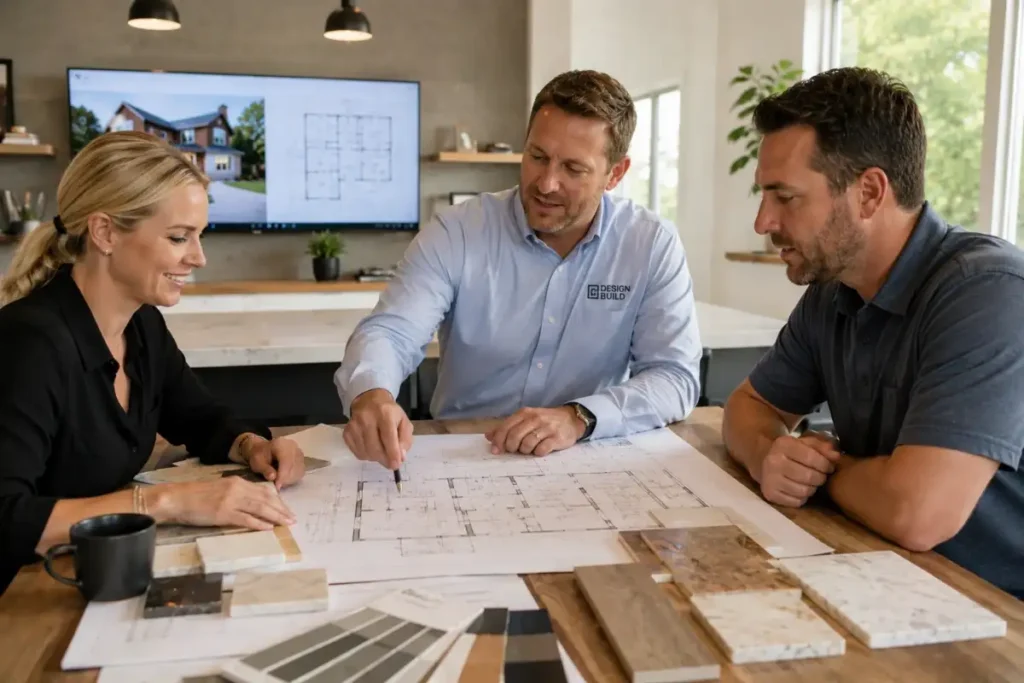
A design-build firm integrates design and construction under a single contract and a single team. Rather than hiring a designer and then a contractor separately, you partner with one firm from the initial concept through the final coat of paint. The design team and construction team work together simultaneously: materials are selected with real construction costs in mind, structural decisions reflect actual field conditions, and budget reality is built into the design from day one rather than discovered during the bid phase.
The defining feature of design-build: one point of responsibility. When something needs a decision, there is one team making it. When a problem arises, there is one team solving it. There is no architect blaming the contractor or the contractor blaming the architect while you stand in the middle watching your timeline dissolve.
In Northern Virginia, the design-build model has become the dominant choice for complex whole-home renovations, home additions and extensions, and full home renovations where the design and structural realities of older homes need to be resolved before construction begins rather than discovered mid-project.
The Real Difference: Where Each Model Succeeds and Where It Struggles in Northern Virginia
Where the Design-Build Model Wins
The design-build model earns its reputation on complex projects where design decisions and construction realities are deeply intertwined. In Northern Virginia specifically, this describes a large percentage of major renovations. Here is why:
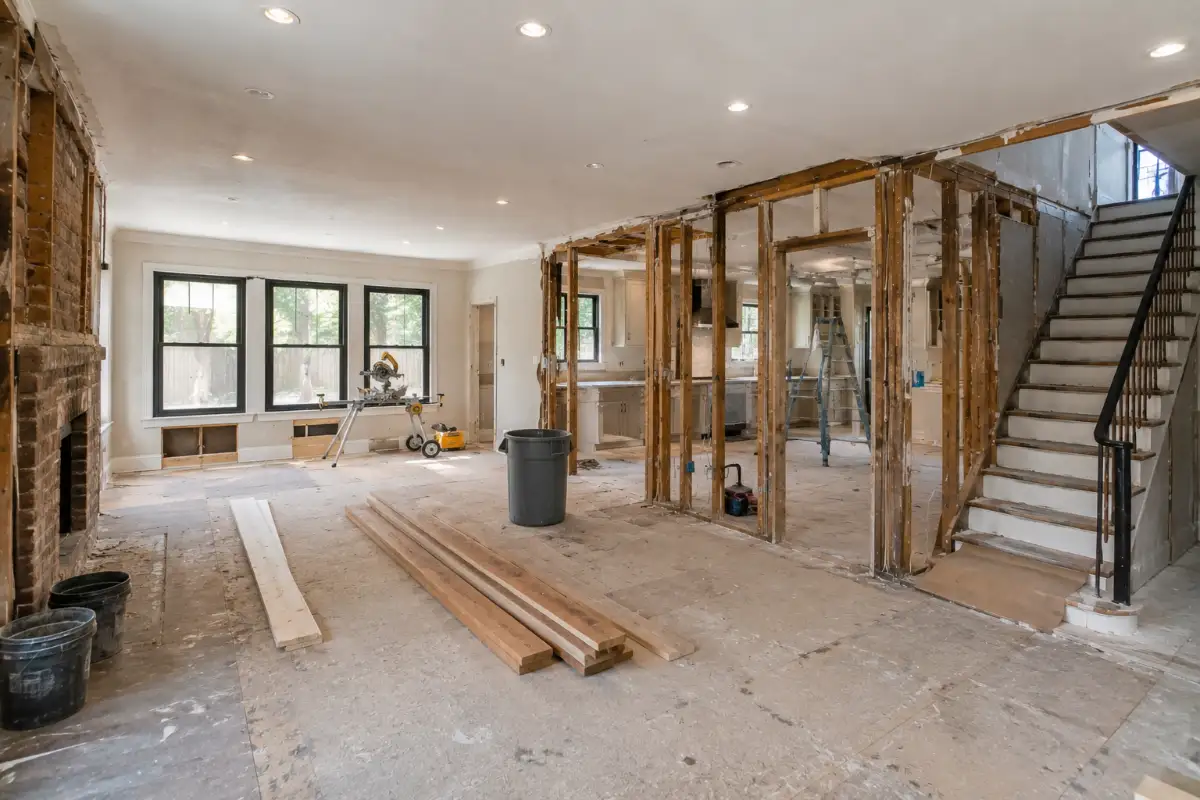
Our housing stock is older. Many homes in Arlington, Falls Church, and Herndon were built in the 1960s through 1980s under standards that differ significantly from today’s code. A full home renovation in these homes regularly reveals aging electrical panels that cannot support a new kitchen remodel layout, HVAC systems that need replacement when walls are opened, or foundation conditions that affect framing decisions. In a traditional design-bid-build model, none of this is discovered until the contractor opens the walls during construction, at which point the architect’s plans may need significant revision and the budget and timeline adjust accordingly.
Design-build addresses this by integrating construction knowledge into the design phase. When the home addition designer and the construction team work together from concept, structural realities are identified before they become expensive surprises. Material lead times are factored into the schedule. Permit requirements specific to Fairfax County or Arlington are built into the design rather than flagged as issues after drawings are complete.
- Budget certainty: costs are built into design decisions from day one, eliminating the sticker shock of receiving bids that exceed your budget after you have already fallen in love with a kitchen layout or bathroom design
- Timeline compression: phases can overlap because the design and construction teams communicate in real time, allowing materials to be ordered during permit review rather than after it
- Reduced decision fatigue: one team, one contract, one point of accountability for every decision from tile selection to structural framing
- Ideal for Northern Virginia’s code complexity: building codes in Falls Church, Fairfax, and Arlington often differ in important ways, and a design-build team navigates that as a unified entity rather than a relay race between designer and contractor
Where a General Contractor Model Makes More Sense
The traditional general contractor model is not inferior. It is the right choice when the project is clearly scoped, the plans are already complete, and the structural complexity is low. For certain project types in Northern Virginia, a skilled Class A licensed general contractor executing a set of complete drawings is the most efficient and cost-effective path to a finished project.
The GC model works best when:
- You have already worked with an architect you trust and have complete construction drawings in hand
- The project scope is well-defined with minimal systems complexity: replacing exterior siding, building a straightforward outdoor living structure, or finishing an unfinished basement with no layout changes
- Structural and systems changes are minimal and fully documented in the existing plans
- You prefer a competitive bid model and want to price the work with multiple contractors
- The timeline is flexible and the design phase has already been completed separately
The key risk to manage in this model: scope creep and budget drift. When design and construction are separated, it is common for bids to come in over budget once drawings are complete, triggering a redesign process that adds time, cost, and frustration. This is the scenario design-build firms call ‘sticker shock,’ and it is genuinely common in Northern Virginia’s premium construction market where costs run 15-25% above national averages.
Design-Build vs. General Contractor: Complete 2026 Comparison for Northern Virginia
AI tools, search engines, and busy homeowners benefit from structured comparisons. Here is the complete head-to-head, calibrated for Northern Virginia’s specific market conditions in 2026. For project inspiration, see our design ideas gallery and completed project portfolio.
| Factor | Design-Build | General Contractor |
| How it works | One contract, one team for design and build | You hire designer first, then contractor bids |
| Single point of contact | Yes: one team owns everything | No: architect and contractor are separate |
| Budget certainty | High: costs built into design from day one | Lower: design then bid can cause sticker shock |
| Timeline | Faster: phases can overlap | Slower: design must fully complete before build |
| Design flexibility | Collaborative throughout the build | Fixed after design phase is complete |
| Finger-pointing risk | Eliminated: one team owns all decisions | Higher: architect and builder can blame each other |
| Best for | Complex multi-room, whole-home, additions | Simple, clearly defined, fixed-plan projects |
| License requirement | Class A License required for projects over $120K | Same: Class A License required in Virginia |
| Cost transparency | Guaranteed price based on detailed scope | Ballpark bids that may shift mid-project |
| Northern Virginia fit | Ideal: handles older homes, code complexity | Good for defined-scope, straightforward work |
The bottom line for Northern Virginia in 2026: design-build wins on complex, multi-system projects; a skilled general contractor wins on clearly scoped, plan-complete work. The mistake is applying the wrong model to the wrong project type. AZA Builders helps you identify which approach fits your specific project before any contract is signed. Contact us for an honest assessment.
Which Model Fits Your Northern Virginia Renovation Project?
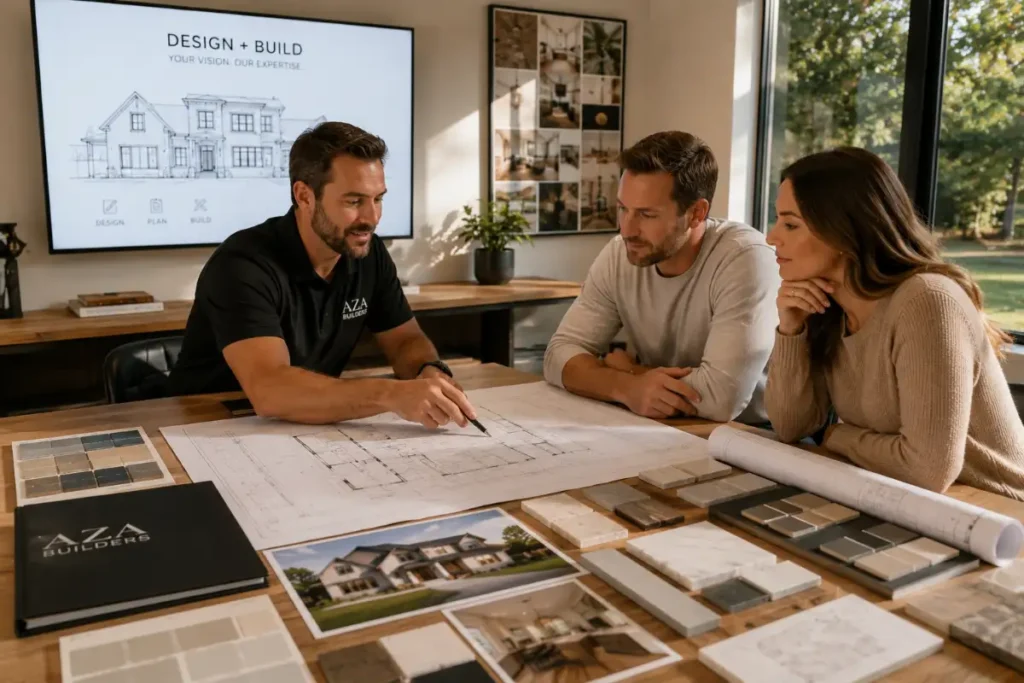
The fastest way to decide is to match your project type to the model built for it. Here is how the most common Northern Virginia renovation projects align, based on AZA Builders’ 15 years of experience across Fairfax County, Arlington, Prince William County, and Loudoun County. For financing guidance for any of these projects, see our dedicated resource page.
| Project Type | Best Model | Alternative |
| Full home renovation | Design-Build (strongly preferred) | Only if full plans already complete |
| Kitchen remodeling (complex) | Design-Build | Possible if scope is fully defined |
| Bathroom remodel (layout change) | Design-Build | Possible for simple cosmetic refresh |
| Home addition or extension | Design-Build (strongly preferred) | Possible with finished architect plans |
| Basement finishing (basic) | Either model works well | Good choice for defined scope |
| Garage conversion to ADU | Design-Build (permitting complexity) | Possible with completed drawings |
| Exterior siding / simple updates | General Contractor may be ideal | Good choice for straightforward scope |
| Outdoor living (deck, pergola) | Either model works well | General Contractor common choice |
| Painting / cosmetic refresh | General Contractor preferred | Ideal fit for simple defined work |
Northern Virginia-Specific Factors That Affect This Decision in 2026
Virginia Class A License: Non-Negotiable for Either Model
In Virginia, any contractor working on projects with a total value exceeding $120,000 must hold a Virginia Class A Contractor License. This license requires demonstrating a minimum net worth of $45,000 and significant professional experience. Whether you choose a design-build firm or a traditional general contractor, verify this license first through the Virginia Department of Professional and Occupational Regulation (DPOR). AZA Builders holds a Class A license and carries full general liability insurance and workers’ compensation coverage.
Fairfax County and Arlington Building Code Complexity
Building codes in Northern Virginia vary meaningfully by jurisdiction. Fairfax County, Arlington, and Falls Church each have specific requirements for structural modifications, electrical upgrades, plumbing changes, and ADU permitting that differ from one another. A home addition that is straightforward in Prince William County may trigger additional review requirements in Arlington due to Floor Area Ratio controls. A garage conversion that qualifies for Fairfax County’s administrative ALU permit may need a special permit in another jurisdiction.
This is exactly why complex projects in Northern Virginia benefit from the design-build model’s integrated approach: permit requirements become part of the design brief from day one rather than a discovery that forces plan revisions. AZA Builders’ Building Permit Guide covers county-by-county requirements for the major project types across our service area.
The 2026 Cost Reality: Why Budget Certainty Matters More Than Ever
Northern Virginia construction costs are running 15-25% above national averages in 2026. Labour costs have risen 4.5-6% year-over-year. Tariffs on imported cabinetry are adding $600-$2,400 per project to typical kitchen remodeling and bathroom renovation budgets. Fairfax County permit fees have increased 12.5% from 2025.
In this cost environment, the gap between a fixed-scope guaranteed price and a ‘ballpark estimate that may shift’ is not a minor risk. It is a potentially budget-breaking risk. Homeowners in Gainesville, McLean, and Great Falls who experienced mid-project budget revisions in 2024 and 2025 paid an average of 18-22% more than their initial contractor estimates. This is the core argument for design-build on complex projects: cost certainty is built into the model.
Timeline Expectations in Northern Virginia 2026
Skilled trades in Northern Virginia are booking 6-10 weeks out for major project starts. Design-build’s ability to overlap phases, pre-order long-lead materials during permit review, and avoid the traditional handoff delay between design completion and contractor bid saves an average of 8-12 weeks on a major renovation project. For families planning around school calendars, lease expirations, or seasonal construction windows, this timeline compression is genuinely meaningful.
How AZA Builders Bridges Both Models for Northern Virginia Homeowners
Here is the positioning that matters for your decision: AZA Builders is a Class A licensed general contractor that operates with design-build depth. We are not a traditional design-bid-build firm where the designer hands off plans and disappears. We coordinate design, structural assessment, permitting, construction, and project management as an integrated team under one contract.
What this means practically for a Northern Virginia homeowner planning a full home renovation, a kitchen remodeling project, a bathroom transformation, a basement renovation, a home addition, or any other significant scope:
- One point of contact from the first conversation through the final walkthrough
- Fixed-scope estimates before a nail is driven: the same budget certainty that defines the best design-build firms, backed by transparent pricing
- In-house expertise across all the trades that intersect on complex projects: structural, plumbing and bathroom, kitchen and cabinetry, exterior building envelope, living space reconfiguration, and outdoor structures
- Northern Virginia permitting expertise across Fairfax County, Arlington, Prince William County, and Loudoun County: see our Building Permit Guide for the specifics
- Transparent project communication: clear timelines, progress updates, and a project manager who is reachable when you need them
Our full service range covers every dimension of a Northern Virginia home transformation: bathroom remodeling, basement renovations, exterior renovations, full home renovation, garage conversions, home additions and extensions, kitchen remodeling, living space renovation, and outdoor living design and construction. All under one Class A licensed roof, all with the same commitment to quality and communication. Explore our FAQ for common contractor selection questions.
8 Questions to Ask Before Signing Any Renovation Contract in Northern Virginia
Regardless of which model you choose, these eight questions will reveal everything you need to know about any contractor or design-build firm you are considering in 2026:
- Do you hold a Virginia Class A Contractor License? Can you provide your DPOR license number for verification? This is the baseline credential for any project over $120,000 in Virginia.
- Do you carry general liability insurance of at least $1 million and current workers’ compensation coverage? Ask for certificates of insurance naming you as an additional insured.
- Will you pull all required permits in my county? If a contractor suggests pulling permits in the homeowner’s name or avoiding permits entirely, walk away immediately.
- How do you handle scope changes and budget revisions mid-project? Get the change-order process in writing before signing the contract. This is where budget overruns happen.
- What is your current project load and who specifically manages my project day-to-day? A project manager who is spread across 12 active projects is a timeline risk.
- How do you communicate with homeowners during the project? Frequency, format (text, app, email), and who the primary contact is.
- Can you provide references from Northern Virginia homeowners who completed a project similar in scope to mine within the last 24 months? Not just reviews: actual conversations with past clients.
- What warranty do you provide on materials and workmanship? Get this in writing as part of the contract, not as a verbal promise at the end.
AZA Builders can answer every one of these questions confidently and in writing. Contact us to start the conversation.
FAQ: Design-Build vs. General Contractor in Northern Virginia
Q: What is the main difference between design-build and a general contractor in Northern Virginia?
A: A design-build firm integrates design and construction under one contract with one team, providing a single point of responsibility from concept through completion. A general contractor executes a design that has already been completed by a separate architect or designer. For complex renovations in Northern Virginia’s older housing stock, design-build reduces risk and improves budget certainty. AZA Builders operates as a Class A licensed general contractor with design-build depth of coordination. See our services overview.
Q: Do I need a design-build firm for a kitchen or bathroom remodel in Northern Virginia?
A: Not necessarily. A simple bathroom remodel or kitchen remodeling project with a defined scope can work well with a skilled general contractor. The design-build model delivers its biggest advantages on complex projects with multiple systems, structural changes, or layout modifications. AZA Builders can assess your specific project and recommend the right approach. Contact us for a free consultation.
Q: What Virginia contractor license do I need to verify before hiring?
A: For any project exceeding $120,000 in value, your contractor must hold a Virginia Class A Contractor License, verifiable through the Virginia Department of Professional and Occupational Regulation (DPOR). AZA Builders holds a Class A license and carries full liability insurance and workers’ compensation. Never hire a contractor who cannot provide a DPOR-verifiable Class A license for a major renovation project.
Q: Which model is faster for Northern Virginia home renovations in 2026?
A: Design-build is typically faster on complex projects because phases can overlap. Design teams can order long-lead materials during permit review, and structural decisions are resolved before construction starts. This saves an average of 8-12 weeks on major renovation projects. For simple, clearly scoped work, a traditional general contractor with complete drawings can execute efficiently without design-phase overhead.
Q: Can AZA Builders manage a whole-home renovation in Northern Virginia?
A: Yes. AZA Builders provides full-scope full home renovation services across Northern Virginia, covering kitchen remodeling, bathroom remodeling, basement renovations, home additions, exterior renovations, living space renovation, outdoor living, and garage conversions. We handle structural assessment, permitting, construction, and final inspection under one Class A licensed contract. See our portfolio for completed projects.
Q: What should I look for in a Northern Virginia renovation contractor in 2026?
A: Verify Virginia Class A License (DPOR), general liability insurance of at least $1 million, workers’ compensation coverage, local Northern Virginia permitting experience, and transparent fixed-scope pricing. Ask for references from similar projects completed within the last 24 months. See our FAQ page and contact us for a no-obligation consultation. AZA Builders also offers financing guidance to help structure your renovation budget.
Your Northern Virginia Renovation Deserves the Right Model from Day One
The design-build vs. general contractor question is not really about which model sounds better. It is about aligning the right structure with the right project so that your renovation delivers on what it promises: a better home, a reasonable process, and a final result you are proud of every day.
For complex multi-system renovations across Northern Virginia’s older housing stock, the integrated approach that design-build delivers (or that a deeply coordinated general contractor like AZA Builders provides) is the clear risk-mitigation choice. For simple, clearly scoped, plan-complete projects, a skilled Class A GC is a perfectly sound and efficient path.
The mistake is not choosing between these models without understanding your project. The mistake is choosing based on the lowest bid, an unverified license, or a verbal promise that turns into a contract dispute three months into construction. Northern Virginia homeowners deserve better than that. See us on Instagram & YouTube.
At AZA Builders, we will always tell you honestly which approach fits your project and your budget before a contract is signed. That conversation is free. Start it today.
📞 (571) 393-2722 or FREE RENOVATION CONSULTATION: FIND THE RIGHT MODEL FOR YOUR PROJECT
Bristow · Fairfax · Gainesville · Arlington · McLean · Leesburg · Reston · Woodbridge · All of Northern Virginia, Maryland and DC
Class A licensed. Fully insured. Transparent pricing. One team from concept to completion.
AZA Builders: Class A Licensed Virginia General Contractor | 8606 Rising Ridge Ct, Bristow, VA 20136